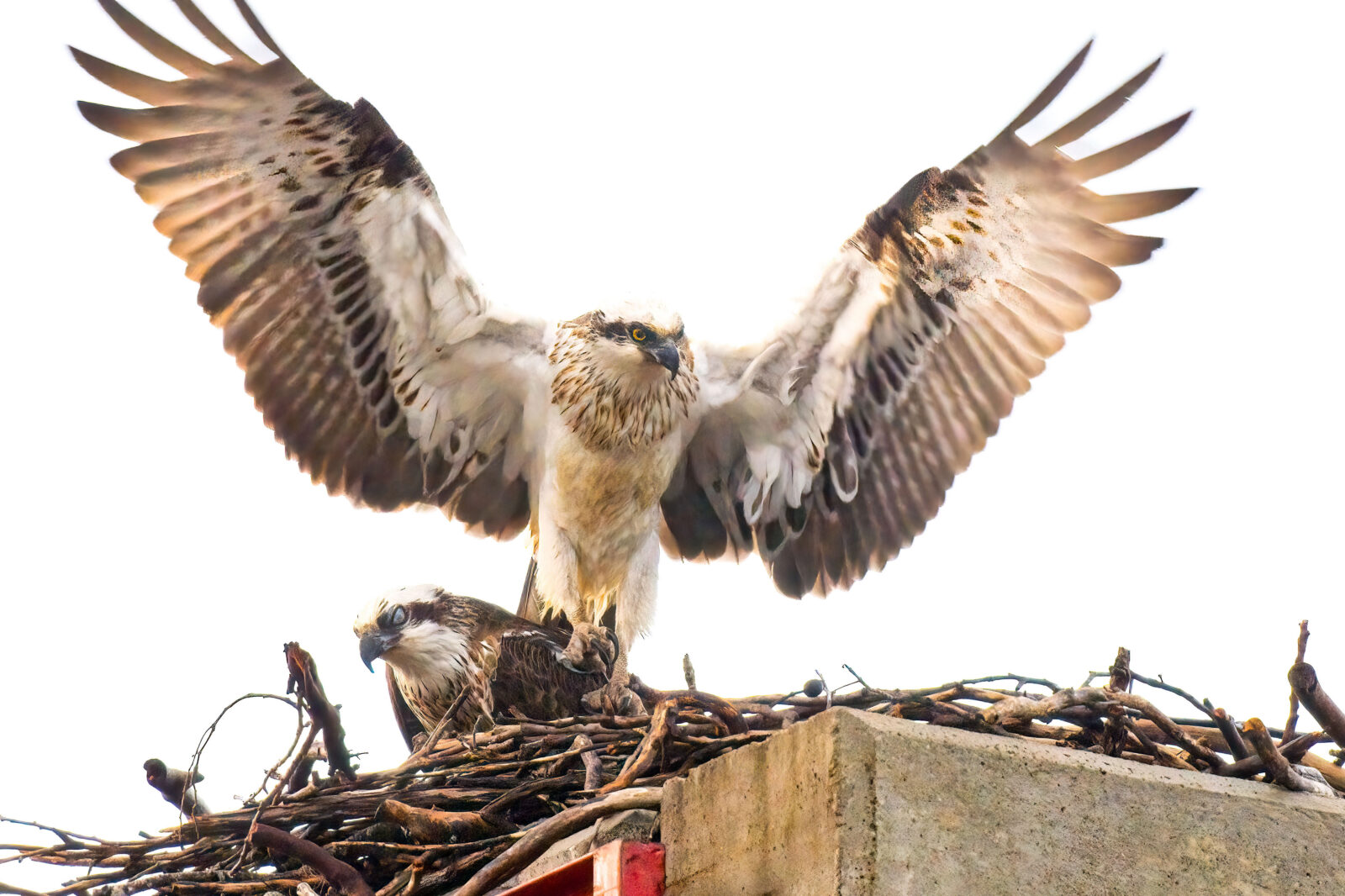
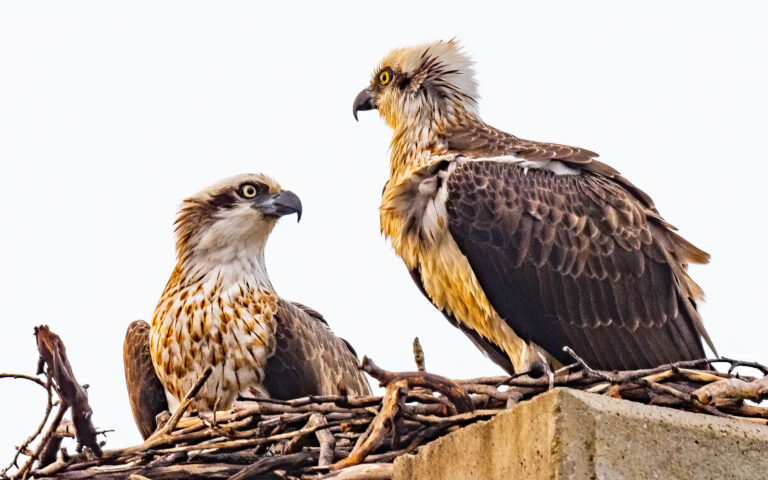
The eastern osprey (Pandion cristatus) is a fish-eating raptor that’s found along coastlines, estuaries, and major rivers across Australia. With a wingspan of up to 1.8 metres, a distinctive dark eye stripe, and strong talons built for gripping slippery prey, ospreys are perfectly adapted for life around the water.
In the Georges River region, a pair of Ospreys has become a welcome sight, particularly around Lime Kiln Bay in Lugarno, where they’ve been observed fishing and nesting for several years. These birds are listed as Vulnerable in New South Wales, and their presence here is something to celebrate — and protect.
Why Ospreys matter
As apex predators in the river ecosystem, Ospreys play a key role in maintaining balance. Their diet consists almost entirely of live fish, which they snatch from the water with impressive precision and their hooked beak. They also have a reversible toe and barbed pads on their feed that help them catch the fish. Because they rely on a healthy, abundant fish population, the presence of Ospreys can signal good water quality and overall ecosystem health.
When Ospreys are thriving, it’s often a sign that the food web beneath them is strong — from aquatic insects and small fish to larger predatory fish species. In this way, they act as natural indicators, helping conservationists monitor the state of the environment.
Challenges facing the Osprey
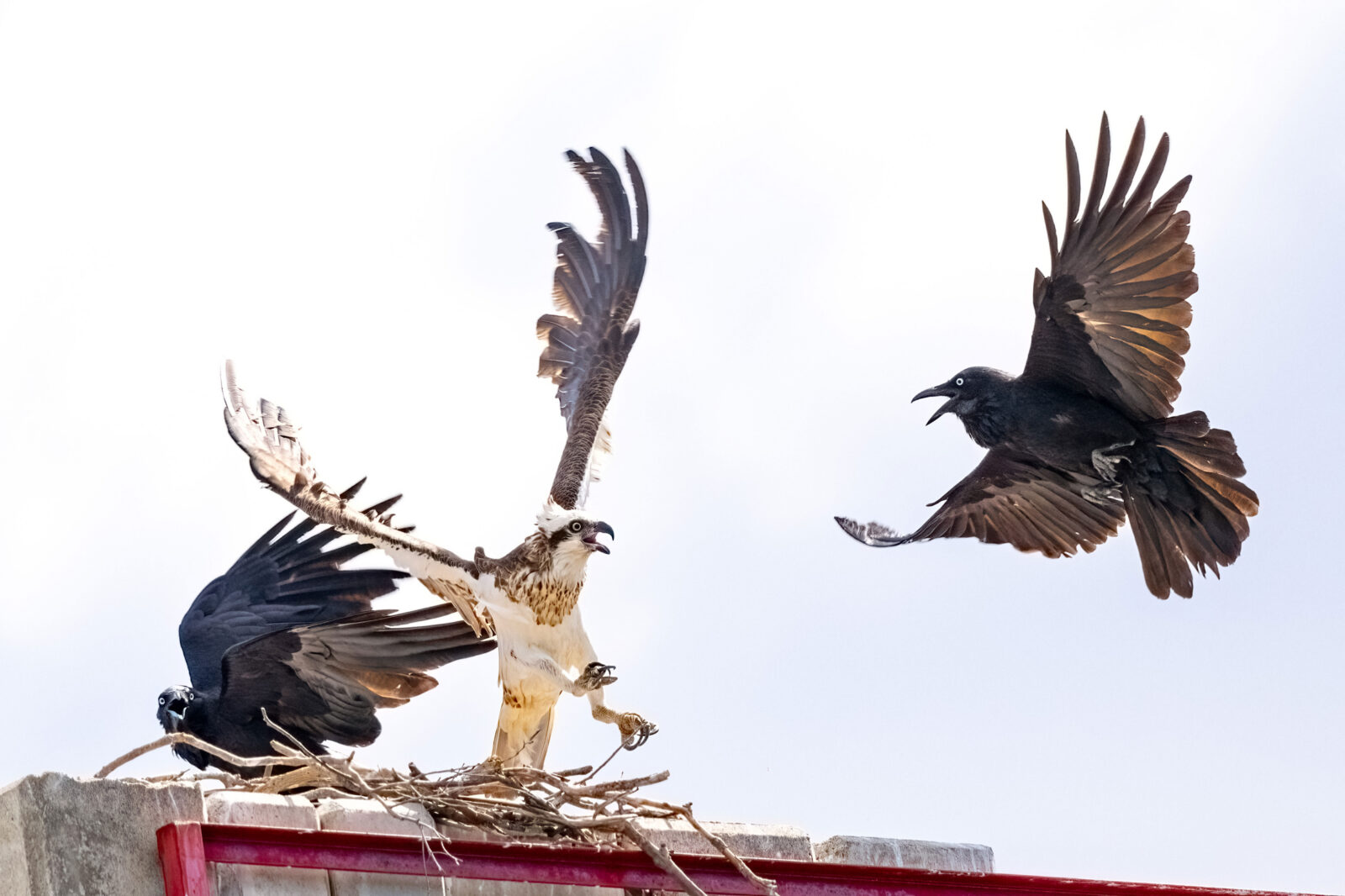
Despite their resilience, Ospreys face a number of threats. Habitat loss is one of the biggest challenges, especially the loss of tall nesting sites like dead trees, poles, or undisturbed structures near water. Human disturbance, pollution, and predation by other birds — such as crows raiding nests — also impact their breeding success.
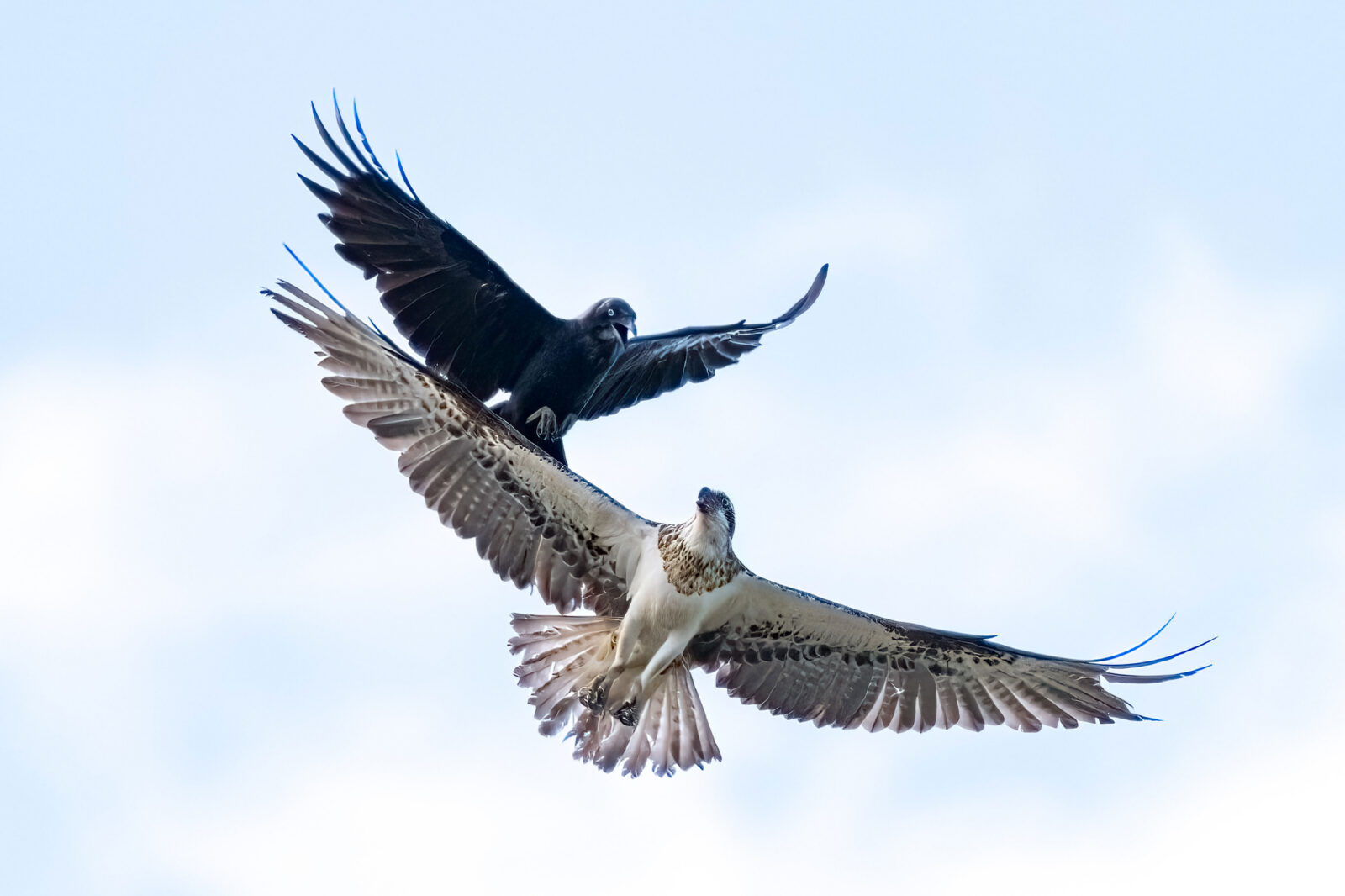
Ospreys are also often mobbed by smaller birds like crows and myna birds, especially during breeding season. Despite being attacked or struck, Ospreys usually react passively and don’t fight back.
In Lugarno along the Georges River, one Osprey pair has taken to nesting on an active construction crane, drawn to its height and vantage point. While ingenious on the birds’ part, this solution was far from ideal. Construction activity, potential removal of the crane, and falling nesting materials created risks for both the birds and the surrounding community.
A safer solution
Recognising the need for a safer, more sustainable nesting site, George Riverkeeper partnered with Georges River Council to install a purpose-built Osprey nesting pole and platform in Lime Kiln Bay.
How you can help
Want to play a part in protecting Ospreys and the river ecosystem?
- Observe responsibly: If you spot the Ospreys, enjoy the view from a distance. Avoid disturbing their nesting area, especially during breeding season.
- Keep the river clean: Litter and pollution harm fish populations and water quality — both critical to Osprey survival.
- Support habitat projects: Local conservation efforts like the nesting pole rely on community support. Share stories like this one to help spread awareness.
- Get involved: Join local Bushcare groups or river clean-up days to help create habitat for wildlife.