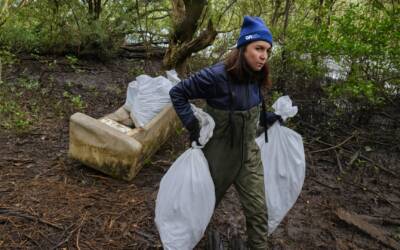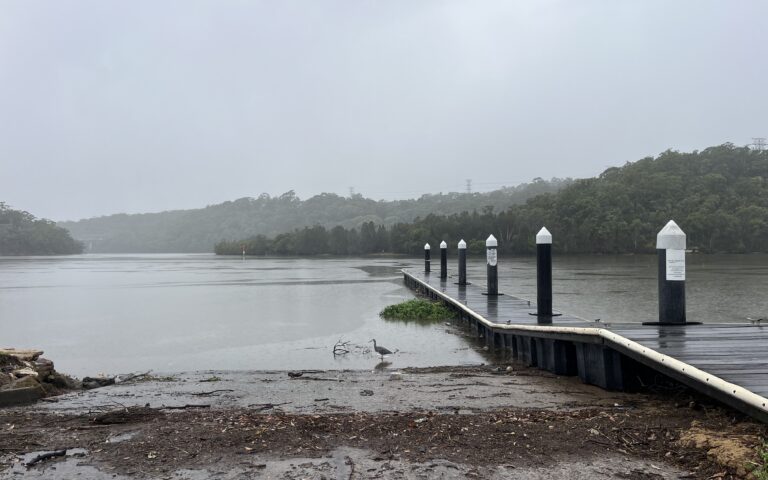
This summer has felt soggy, and it’s not just a feeling. Repeated downpours across Sydney have turned streets, gutters and drains into fast-moving pathways that funnel pollution straight into the Georges River. Each storm acts like a conveyor belt, sweeping litter, plastics, nutrients and chemicals from our suburbs into nearby creeks and, ultimately, the river itself. In one sense, this is stormwater doing exactly what it was designed to do. In another, it is one of the biggest and least recognised pollution pressures facing the Georges River today.
A summer that won’t dry out
Sydney’s climate has always been variable, but recent summers have leaned wetter, with frequent showers broken by intense rainfall events. When conditions are dry, pollution tends to sit quietly on roads and verges. In a wet summer, there is no pause. Everything loose in the landscape is constantly flushed towards the nearest drain. When a big storm hits, the system shifts from a trickle to a torrent, and the river feels the impact almost immediately.
The city behind the catchment
The Georges River flows through some of the most densely urbanised parts of south-west Sydney. From Glenfield to Botany Bay, the catchment weaves through suburbs built on former wetlands and floodplains. Over time, creeks such as Cabramatta, Prospect and Salt Pan have been straightened, piped or lined with concrete to move water away from homes as quickly as possible.
That engineering has a hidden cost. Hard surfaces leave little opportunity for rain to soak into the ground. Instead, water hits concrete, collects whatever is lying there, and races through the stormwater network into the river within minutes.
What stormwater actually carries
When we think of pollution, many of us picture factory pipes or sewage outfalls. In reality, stormwater is now one of the major sources of contamination in the Georges River. Every rainfall event mobilises a familiar mix: plastic bottles, food wrappers and cigarette butts from gutters, microscopic plastic fragments shed from tyres and synthetic fabrics, nutrients from fertilisers and pet waste, sediment from construction sites, and oils and heavy metals from roads and car parks.
Monitoring has shown that wet periods have a profound effect on water quality. During particularly rainy years, turbidity, nutrient levels and bacteria all rise, dragging overall river health grades down. These changes are closely tied to repeated pulses of stormwater flowing off surrounding suburbs.
Microplastics, hiding in plain sight
Even when the water looks clear after rain, the hidden load can be enormous. Microplastics are small enough to slip past most capture devices and settle into riverbeds, mangroves and shorelines. Some sites along the Georges have recorded high microplastic densities, even where overall water quality is rated as “good”.
These particles are not harmless. They can be eaten by plankton, fish and birds, carrying attached chemicals and microbes through the food web. In a wet summer, when stormwater flushing increases, so does the delivery of microplastics to the river.
Why wet summers matter
For the Georges River, rain is a double-edged sword. Regular flows can dilute some pollutants and prevent stagnation. But frequent storms also mean frequent pollution pulses, each one adding another layer of stress. Our stormwater systems were designed to protect people and property from flooding, not to protect rivers from pollution. As summers become wetter or more erratic, that mismatch becomes harder to ignore.
What can be done
There is good news. Across the catchment, councils and community groups are installing gross pollutant traps, restoring riparian vegetation and running clean-ups that are making a difference. But tackling plastics and microplastics requires bigger, more systemic change.
Potential solutions include reducing litter and plastic use at the source, expanding green infrastructure such as rain gardens and constructed wetlands to slow and filter runoff before it reaches creeks, retrofitting older suburbs with improved stormwater capture and treatment, ensuring new planning and development controls account for a wetter climate, and innovating to treat stormwater as a valuable resource rather than something to be quickly drained away.
A river shaped by our streets
The Georges River reflects more than the rain that falls from the sky. It reflects what sits on our roofs, roads and nature strips when the rain arrives. This wet summer has simply made that connection impossible to ignore. Until stormwater is treated as a core pollution source, the river will continue to carry the hidden cost of our hard, built landscape, one downpour at a time.